



Equipment in computer rooms suddenly crashing and delicate instruments malfunctioning might all be caused by static electricity 'causing trouble.' Nowadays, the ubiquitous anti-static flooring hides what kind of 'electric controlling magic'? The answer lies in its special materials and structural design.
To understand the principle of anti-static protection, one must first understand the 'temper' of static electricity. Static electricity is essentially the residual charge on the surface of an object, like an ever-growing 'electric tiger.' Once it comes into contact with a conductor, it discharges instantly, causing static discharge. The core task of anti-static flooring is to provide these 'electric tigers' with a safe 'exit.'
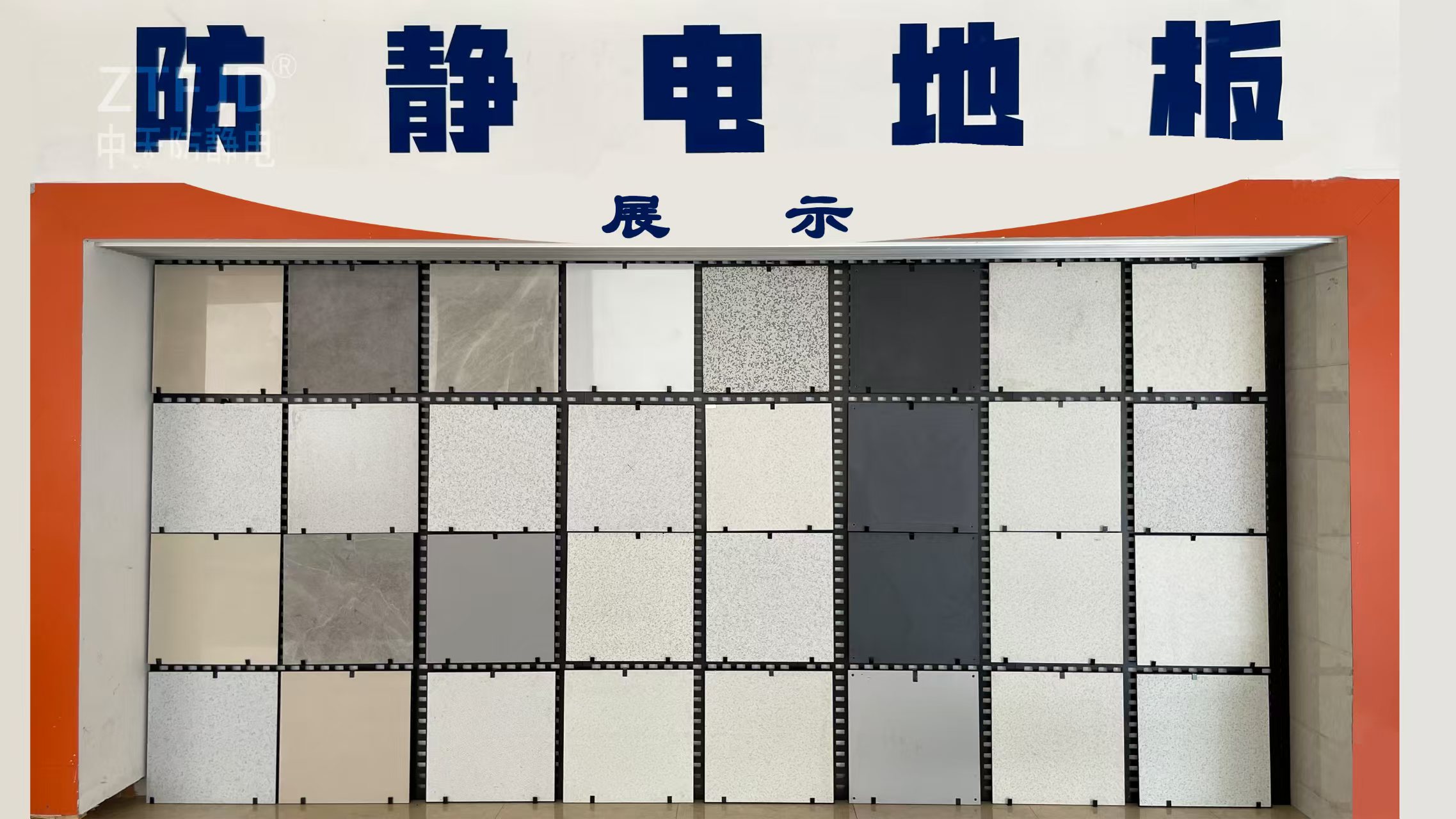
The starting point of this 'exit' is the special material of the floor itself. During production, manufacturers add conductive materials such as carbon to the base material, making the floor a 'semi-conductor'—not as conductive as metal, yet not as insulating as ordinary flooring. According to national standards, its surface resistance needs to remain stable between 10⁵ and 10¹² ohms, a range that is the 'golden zone' for dissipating static electricity.
The 'secret grid' at the bottom of the floor is a crucial component. Copper foil is laid out in a dense grid, connecting each floor panel as a whole, and linked to the grounding electrodes with wires, forming a complete conductive path. When equipment generates static electricity through friction, the charge is first absorbed by the floor and then 'flows' through the copper grid into the ground wire, eventually being safely discharged into the earth, preventing charge accumulation from the source.
From special materials to grounding systems, anti-static flooring acts like an 'invisible traffic controller,' using scientific design to make static electricity obediently 'return to the ground,' establishing a safety barrier for delicate equipment.